Months Later, Still Hurting: Where to Find Grief Support When the Casseroles Have Stopped
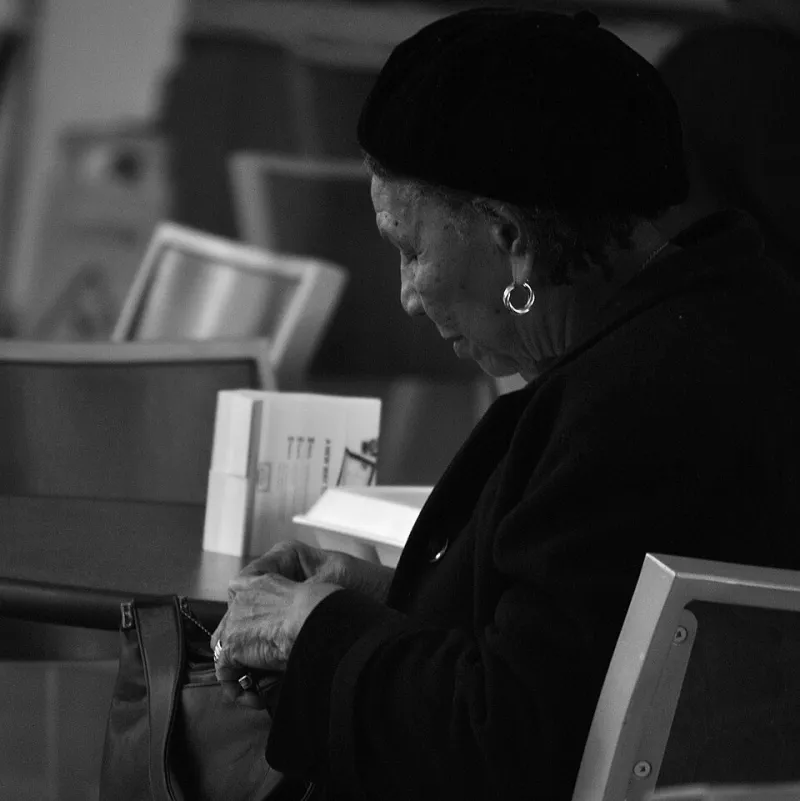
Photo: Ashley Campbell, CC BY 2.0, via Wikimedia Commons
There's a strange thing that happens a few months after someone dies. The cards stop coming. The neighbours stop asking how you're coping. Your mates stop gently steering conversations away from certain topics, because as far as they're concerned, you've 'had time to process now'. Meanwhile, you're still waking up at 4am remembering they're gone.
If that sounds familiar, here's the first thing worth saying plainly: there is no statutory deadline on grief. Not in Britain, not anywhere. The idea that you should be 'over it' by three months, six months, or even a year is a social convention, not a clinical one.
The Myth of the Grief Timetable
Much of the pressure comes from a well-meaning but outdated notion that mourning is a tidy process — something you complete, like a mortgage application. In reality, grief tends to arrive in waves, and those waves don't check the calendar. A song on the radio in a Tesco car park can flatten you eighteen months later. That's not a relapse. That's just love with nowhere to go.
Researchers sometimes call this 'disenfranchised grief' — mourning that society has quietly decided you're no longer entitled to express. It's why people feel embarrassed to say they're struggling after a year, as though mentioning it makes them a burden. You aren't. But it does mean you may need to look outside your immediate circle for support.
Cruse and the Bereavement Charities
The best-known starting point is Cruse Bereavement Support, a national charity that's been helping grieving people for decades. They offer free one-to-one support, both over the phone and in person in many areas, with no time limit on how long ago your loss happened. Whether it's been six weeks or six years, they'll listen.
Their national helpline is open to anyone in England, Wales and Northern Ireland, and their website has a genuinely useful library of resources covering specific situations — losing a partner, losing a child, losing someone to suicide, grieving as a young person. Scotland has its own strong network too, including Cruse Scotland and local bereavement services through hospices.
Don't overlook hospice bereavement teams either. Most hospices — Marie Curie, local independent ones, Sue Ryder — offer bereavement support not just to families of patients but often to the wider community. A quick search for '[your town] hospice bereavement service' usually turns up something local.
Grief Circles and the Power of Company
Sometimes what you need isn't a professional but a room of people who simply get it. That's where peer grief circles come in.
- The Good Grief Trust runs signposting to local support groups across the UK and campaigns on the reality of long-term grief.
- Widowed and Young supports people who've lost a partner under 50 — a group for whom grief often feels especially isolating, because nobody else at the school gates is going through it.
- Sands supports families after the loss of a baby, and WAY (Widowed and Young) meetups are informal, often just a coffee and a chat.
- Many churches, community centres and libraries host free drop-in bereavement cafes — no faith required in most cases, whatever the venue.
There's something quietly powerful about sitting with people who don't flinch when you mention the person who died. No changing the subject. No 'aren't you better yet?' Just company.
Online Communities for the 3am Moments
Grief doesn't keep office hours, and neither does the internet. Online spaces can be a lifeline when it's 2am and the thoughts are circling.
The Sue Ryder Online Bereavement Community is a moderated forum staffed in part by bereavement volunteers, which makes it a safer corner of the internet than most. Reddit's grief communities, while unmoderated to clinical standards, offer raw, honest solidarity. Cruse also runs an online chat service for those who find typing easier than talking.
A word of gentle caution: online spaces are brilliant for connection, but if you notice your grief intensifying rather than easing over many months — affecting your ability to work, eat, or leave the house — that's a sign to speak to your GP. Prolonged and severe grief can be treated, and asking for help with it is no different from asking for help with chronic pain.
How to Ask for Support Without Feeling Like Old News
This is the bit many people find hardest. You've already had your turn being checked up on. Raising it again feels like complaining about weather everyone else stopped noticing months ago.
A few things that help:
Name it directly. 'I know it's been a while, but I'm still finding this really hard' gives people permission to keep showing up. Most friends genuinely don't know what to say, so they say nothing. You're doing them a favour by opening the door.
Ask for something specific. 'Could we go for a walk on Sunday?' lands better than a vague 'I'm struggling'. People want to help; they just need instructions.
Lean on strangers first if it's easier. There's a reason people tell helplines things they can't tell their family. Sometimes it's easier to be honest with someone who didn't know the person you lost.
You're Not Behind. There's No Ahead.
The uncomfortable truth about grief is that you don't get over it so much as you grow around it. The waves come less often, but they still come — and having support in place for those moments isn't weakness or wallowing. It's maintenance.
So if it's been a year, or five, and you're still hurting in ways the people around you can't see: the support exists. Cruse, your local hospice, a grief circle in a draughty church hall, a forum you scroll at 3am. None of them will ask what took you so long.
That's the whole point.